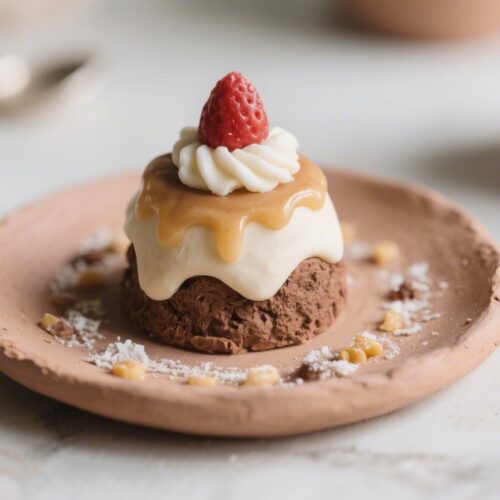
Pick your dessert style. Donuts, cupcakes, and macarons are the easiest and most realistic for beginners.
Decide on sizes—miniatures are cute but trickier, so start medium.
Condition your clay. Knead until smooth and warm. This prevents cracks and helps hold detail.
Shape the base. Donut: Roll a ball, poke a hole with a straw or tool, and widen gently.
Cupcake: Roll a ball for the cake and press into a short cylinder. Add faint vertical lines for the wrapper.
Macaron: Form two even discs with a slight dome.
Add texture for realism. Lightly dab the “cake” surfaces with a toothbrush or crumpled foil for a baked crumb look.
Keep tops smoother if you want a glazed style.
Create the frosting. Mix white glue with a touch of acrylic paint for a quick “icing,” or use liquid clay if you plan to bake it. Drip and spread gently so it looks naturally imperfect.
Make fillings and details. For macarons: Add a thin coil of clay between shells and texture the “feet” with a toothpick.
For cupcakes: Swirl “frosting” using a piping tip or a small plastic bag with the corner snipped.
For donuts: Add a glaze ring and let some drip over the sides.
Color like a baker. Use dry chalk pastels shaved into powder. Brush warm browns on edges for a baked look.
Add blush pinks or cocoa tones for depth. Keep it subtle.
Sprinkle and shine. While “frosting” is tacky, press on microbeads for sprinkles. Add tiny clay fruits if you like.
Seal with a gloss varnish or thin UV resin layer for a true pastry sheen.
Cure or dry. Air-dry clay: Let dry 24–48 hours, turning occasionally for even drying.
Polymer clay: Bake per package directions on a lined sheet. Do not overbake.
Finish and assemble. Glue on magnet backs or insert eye pins before curing if making charms. Add a final gloss coat to icing areas for that “freshly glazed” look.