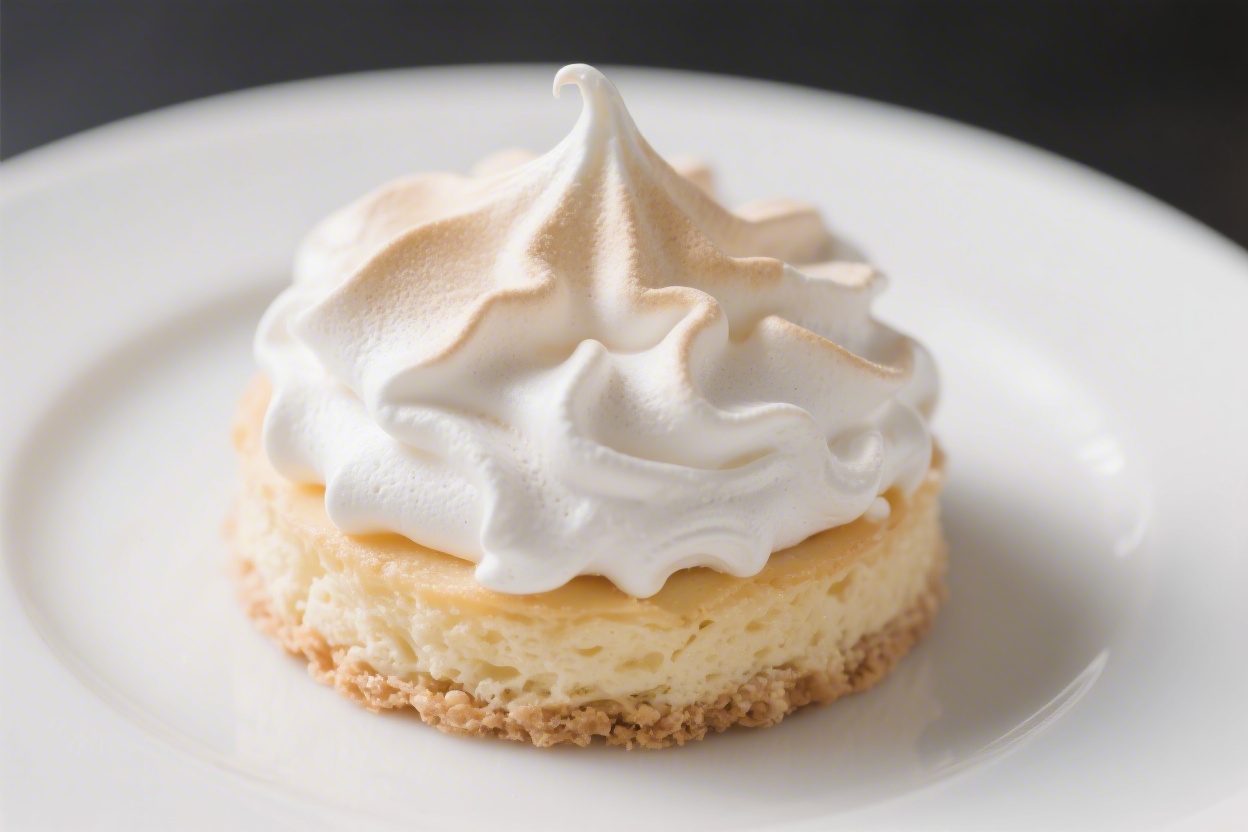
Meringue Dessert That Is Light and Airy – A Simple, Elegant Treat
Meringue is that rare dessert that feels special but asks for almost nothing in return—just egg whites, sugar, and a little patience. It bakes up crisp on the outside with a marshmallow-soft center, or completely crisp if that’s your style. Serve it as small kisses, cloud-like nests, or a full pavlova topped with cream and fruit.
This version is straightforward, dependable, and easy to master at home. If you’ve never made meringue before, this guide keeps it friendly and fuss-free.
Why This Recipe Works
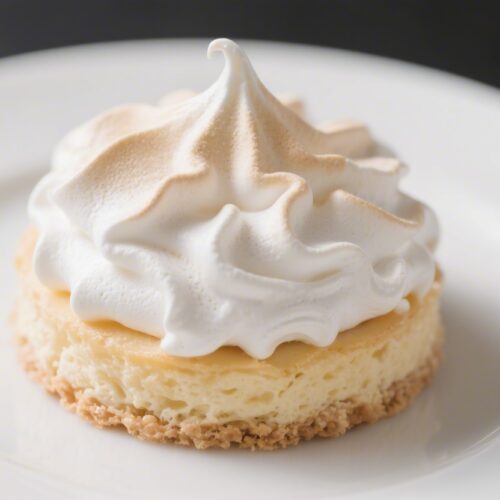
Meringue Dessert That Is Light and Airy - A Simple, Elegant Treat
Ingredients
- 4 large egg whites, room temperature
- 1 cup (200 g) superfine sugar (caster sugar)
- 1/2 teaspoon cream of tartar (or 1 teaspoon fresh lemon juice)
- 1 teaspoon pure vanilla extract (optional)
- Pinch of fine salt
Instructions
- Prep the oven and pan: Heat the oven to 225°F (110°C). Line a baking sheet with parchment. Make sure your mixing bowl and whisk are completely clean and dry.
- Separate the eggs: Carefully separate 4 egg whites from the yolks. Any trace of yolk can prevent whipping, so work over a small bowl and transfer the clean white to your mixer bowl one by one.
- Start the whip: Add the egg whites and salt to the bowl. Beat on medium speed until foamy and opaque, about 1–2 minutes.
- Stabilize: Add cream of tartar (or lemon juice). Continue beating until soft peaks form—when you lift the whisk, the peaks gently slump.
- Add sugar slowly: With the mixer running on medium-high, add the sugar one tablespoon at a time, taking 1–2 minutes to add it all. This helps it dissolve fully.
- Beat to firm, glossy peaks: Continue whipping until the meringue is thick, shiny, and holds firm peaks that stand straight. Rub a tiny bit between your fingers; it should feel smooth, not gritty. Add vanilla and beat 5 seconds more.
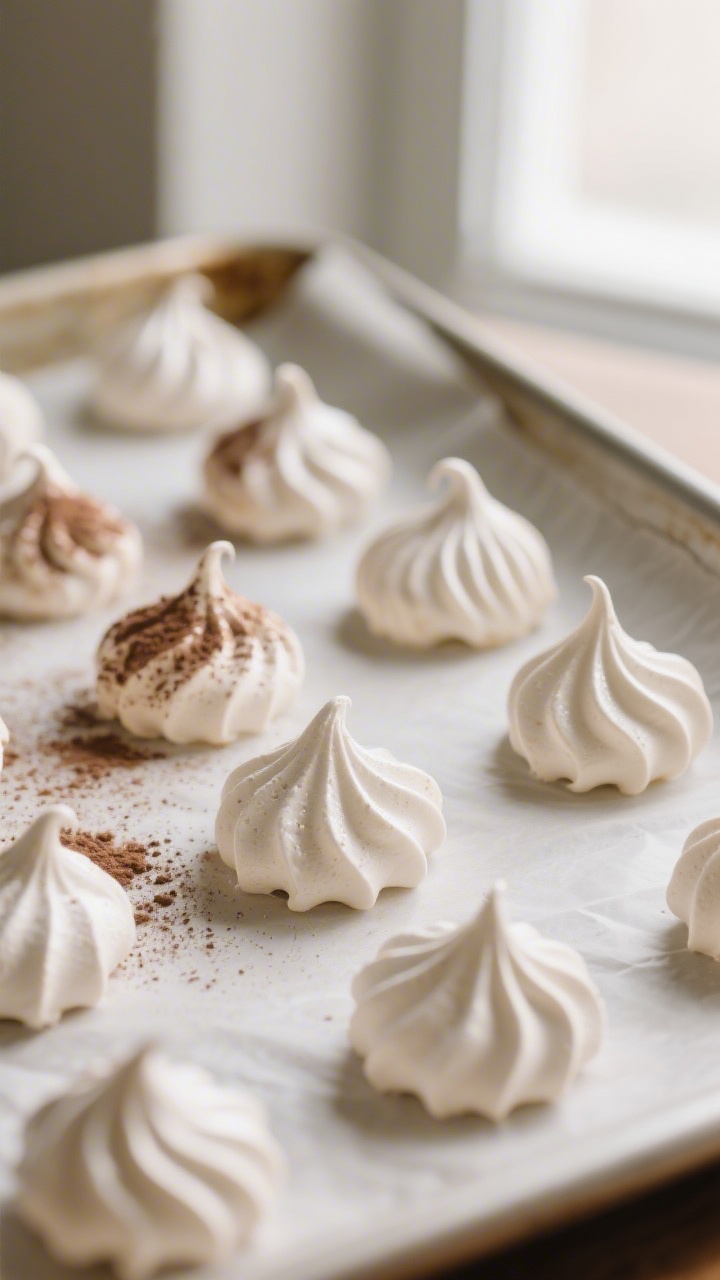
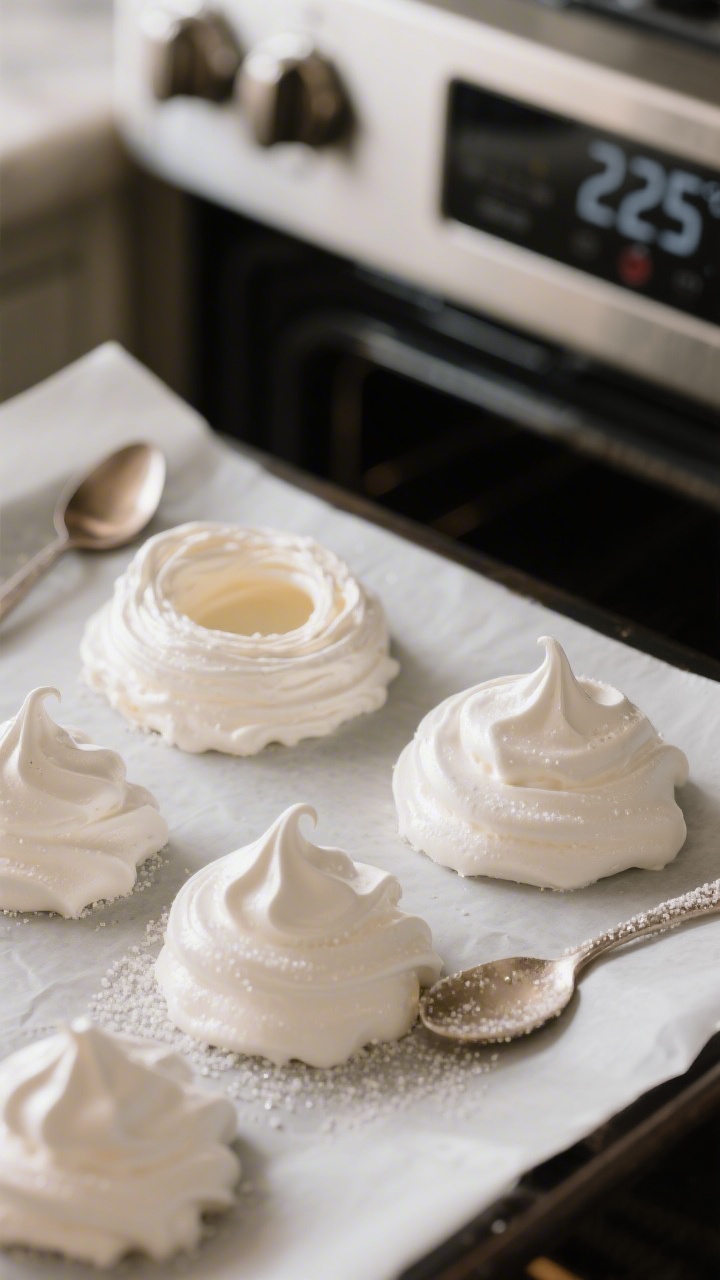
- Shape: Spoon or pipe mounds or kisses onto the parchment, spacing slightly apart. For nests, use the back of a spoon to make shallow wells.
- Bake low and slow: Bake for 60–75 minutes, depending on size. They should feel dry to the touch and lift easily from the parchment.
- Cool in the oven: Turn off the oven and let the meringues cool inside with the door cracked for 30–60 minutes. This minimizes cracks from sudden temperature changes.
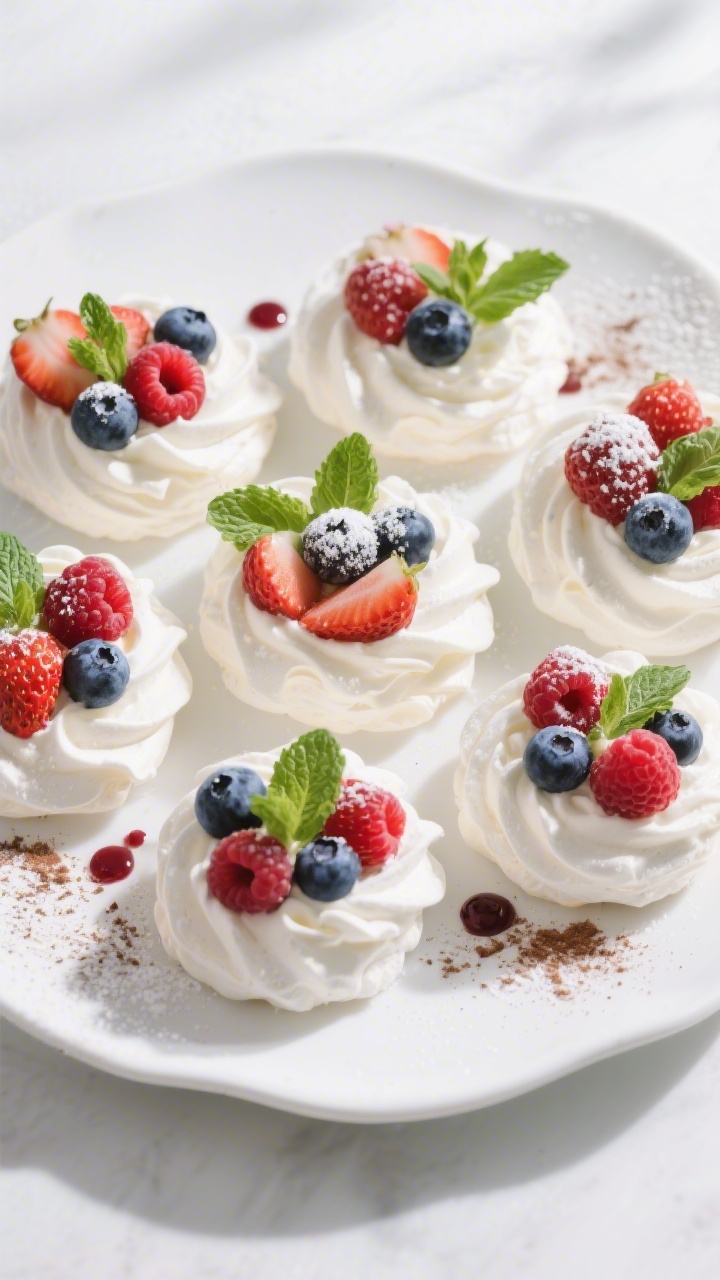
- Serve: Enjoy plain, dust with cocoa, or fill nests with whipped cream and berries.
- Stable structure: A touch of acid (cream of tartar or lemon juice) helps the egg whites whip up strong and stable.
- Fine sugar dissolves fully: Superfine (caster) sugar melts into the whites for a smooth, glossy finish without grit.
- Low-and-slow bake: A gentle oven dries the meringue so it stays crisp outside and light inside.
- Clear cues: Firm peaks and a glossy sheen are your signposts so you know exactly when to stop whipping.
Ingredients
- 4 large egg whites, room temperature
- 1 cup (200 g) superfine sugar (caster sugar)
- 1/2 teaspoon cream of tartar (or 1 teaspoon fresh lemon juice)
- 1 teaspoon pure vanilla extract (optional)
- Pinch of fine salt
Step-by-Step Instructions
- Prep the oven and pan: Heat the oven to 225°F (110°C). Line a baking sheet with parchment.Make sure your mixing bowl and whisk are completely clean and dry.
- Separate the eggs: Carefully separate 4 egg whites from the yolks. Any trace of yolk can prevent whipping, so work over a small bowl and transfer the clean white to your mixer bowl one by one.
- Start the whip: Add the egg whites and salt to the bowl. Beat on medium speed until foamy and opaque, about 1–2 minutes.
- Stabilize: Add cream of tartar (or lemon juice).Continue beating until soft peaks form—when you lift the whisk, the peaks gently slump.
- Add sugar slowly: With the mixer running on medium-high, add the sugar one tablespoon at a time, taking 1–2 minutes to add it all. This helps it dissolve fully.
- Beat to firm, glossy peaks: Continue whipping until the meringue is thick, shiny, and holds firm peaks that stand straight. Rub a tiny bit between your fingers; it should feel smooth, not gritty.Add vanilla and beat 5 seconds more.
- Shape: Spoon or pipe mounds or kisses onto the parchment, spacing slightly apart. For nests, use the back of a spoon to make shallow wells.
- Bake low and slow: Bake for 60–75 minutes, depending on size. They should feel dry to the touch and lift easily from the parchment.
- Cool in the oven: Turn off the oven and let the meringues cool inside with the door cracked for 30–60 minutes.This minimizes cracks from sudden temperature changes.
- Serve: Enjoy plain, dust with cocoa, or fill nests with whipped cream and berries.
Keeping It Fresh
- Store airtight: Once fully cool, place meringues in an airtight container with parchment between layers. Keep at room temperature for up to 5 days.
- Avoid humidity: Moist air softens meringues. If they get sticky, re-crisp in a 200°F (95°C) oven for 10–15 minutes and cool again.
- Do not refrigerate: The fridge adds moisture, which makes them chewy.
Health Benefits
- Light on calories: Meringue is mostly egg whites and sugar, so a small serving can satisfy a sweet tooth without being heavy.
- Protein from egg whites: Egg whites offer lean protein with no fat or cholesterol.
- Gluten-free by nature: No flour needed, which is great for gluten-free guests.
Pitfalls to Watch Out For
- Grease or yolk contamination: Even a tiny bit prevents proper whipping.Use a clean, dry metal or glass bowl.
- Adding sugar too fast: Dumps of sugar cause weeping and grit. Add slowly.
- Overbeating: If the meringue looks dull or clumpy, you went too far. Stop at firm, glossy peaks.
- High heat: Too hot and they brown or crack.Stick to low heat and a longer bake.
- Humidity: Damp days can make meringue sticky. Bake on a dry day if possible or use a dehydrating step at the end.
Variations You Can Try
- Chocolate swirl: Gently fold in 2 tablespoons cooled, melted dark chocolate for a marbled look.
- Lemon-kissed: Add 1 teaspoon finely grated lemon zest and skip vanilla.
- Spice it up: A pinch of cinnamon or cardamom adds warmth.
- Nut crunch: Sprinkle chopped toasted pistachios or almonds on top before baking.
- Peppermint: Add 1/4 teaspoon peppermint extract and streak with red gel coloring for holiday meringues.
FAQ
Can I use regular granulated sugar?
Yes, but pulse it in a food processor for 10–15 seconds to make it finer. Superfine sugar dissolves more easily and gives a smoother finish.
What if I don’t have cream of tartar?
Use 1 teaspoon fresh lemon juice or 1/2 teaspoon white vinegar.
The acid helps stabilize the foam.
How do I make them chewier inside?
Bake slightly larger mounds and reduce the bake time by 10–15 minutes, then cool in the oven. They’ll keep a soft, marshmallowy center.
Can I make a full pavlova with this?
Absolutely. Spread the meringue into a 9-inch round with higher edges.
Bake 75–90 minutes, then cool in the oven before topping with whipped cream and fruit.
Why are my meringues weeping or sticky?
Usually it’s undissolved sugar, high humidity, or underbaking. Add sugar slowly, bake until dry to the touch, and cool in the oven.
Can I use a hand mixer?
Yes. It may take a few minutes longer, but it works well.
Keep the speed at medium-high for control.
Are raw eggs a concern?
The meringues are baked until dry, which addresses safety for most people. For extra caution, use pasteurized eggs.
Final Thoughts
This light and airy meringue dessert is simple, elegant, and endlessly adaptable. With clean tools, patient sugar additions, and a low oven, you’ll get crisp shells and a beautiful texture every time.
Serve them plain or dress them up with cream and fruit—either way, they bring a touch of bakery magic to your table without the stress.
Printable Recipe Card
Want just the essential recipe details without scrolling through the article? Get our printable recipe card with just the ingredients and instructions.